

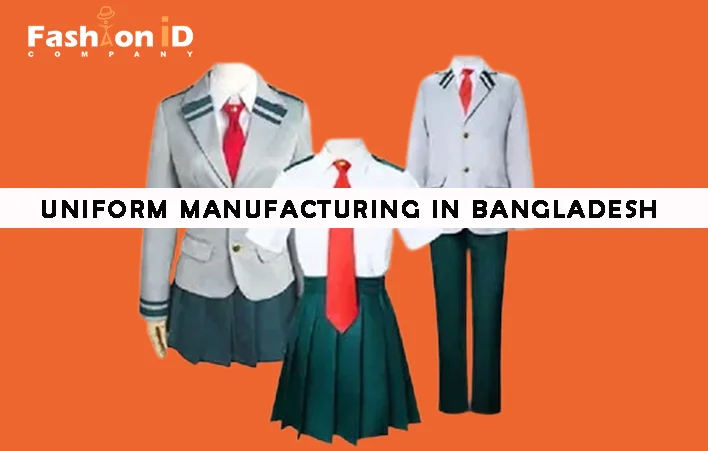
Uniforms represent far more than clothing. They create a professional identity, strengthen brand recognition, build team unity, and establish trust among customers, employees, and the public. Whether it is a school, hospital, hotel, airline, factory, restaurant, security company, or corporate organization, a well-designed uniform reflects the values and standards of the institution it represents.
As global demand for high-quality and cost-effective uniforms continues to grow, Bangladesh has become one of the leading manufacturing destinations for businesses and organizations worldwide. The country’s advanced garment industry, experienced workforce, modern production facilities, and competitive pricing have made it a preferred sourcing location for customized uniforms.
Today, international buyers are not simply looking for a factory that can sew garments. They need a manufacturing partner that understands quality, customization, compliance, sustainability, and timely delivery. From design development and fabric sourcing to quality inspection and international shipping, the right manufacturer helps organizations simplify the entire sourcing process.
This guide explains everything buyers should know about uniform manufacturing in Bangladesh, including available products, manufacturing processes, customization options, quality standards, and how to choose a reliable long-term partner.
Why Bangladesh Is One of the World’s Leading Uniform Manufacturing Hubs

Bangladesh has established itself as one of the largest apparel manufacturing countries in the world. Decades of experience, significant investment in textile production, and a highly skilled workforce have enabled the country to manufacture garments for some of the world’s most recognized brands.
Uniform manufacturing has become one of the strongest segments of this industry because organizations increasingly require durable, comfortable, and customized apparel that meets professional standards.
Learn Why Indian Fashion Brands Are Shifting to Bangladesh for Sourcing 2026
Highly Skilled Workforce
Millions of professionals work throughout Bangladesh’s garment sector, bringing expertise in pattern development, cutting, sewing, embroidery, printing, finishing, and quality inspection. Their experience allows manufacturers to produce uniforms with consistent sizing, durable construction, and excellent finishing.
Complete Textile Supply Chain
Bangladesh offers a comprehensive manufacturing ecosystem that includes:
- Yarn production
- Fabric mills
- Dyeing facilities
- Printing units
- Embroidery factories
- Washing plants
- Accessories suppliers
- Packaging manufacturers
This integrated supply chain improves quality control and reduces production lead times.
Cost-Effective Manufacturing
Bangladesh provides exceptional value by combining competitive production costs with international manufacturing standards. Organizations can source premium-quality uniforms while maintaining efficient procurement budgets.
Large Production Capacity
Manufacturers in Bangladesh can handle:
- Small custom orders
- Medium-scale production
- Large institutional contracts
- International wholesale requirements
- Government procurement projects
This flexibility allows both startups and multinational organizations to work with the same manufacturing ecosystem as their requirements grow.
Global Export Experience
Uniform manufacturers in Bangladesh regularly supply products to buyers across North America, Europe, the Middle East, Asia, and Africa. Their experience with export documentation, compliance requirements, packaging standards, and logistics helps international buyers source products with confidence.
What Is a Uniform Manufacturer?

A uniform manufacturer is a specialized apparel company that designs, develops, and produces standardized clothing for organizations across various industries. Unlike general fashion manufacturers, uniform manufacturers focus on functionality, consistency, durability, and brand identity.
Their responsibilities often include:
- Requirement analysis
- Fabric sourcing
- Product design
- Pattern development
- Sample creation
- Bulk production
- Logo embroidery
- Screen or digital printing
- Quality control
- Packaging
- Export coordination
Rather than simply producing garments, a professional manufacturer becomes a long-term sourcing partner that helps organizations maintain consistent quality and supply.
Who Needs a Uniform Manufacturer?

Uniform manufacturing serves a wide range of industries and institutions.
Educational Institutions
Schools, colleges, universities, and training centers require uniforms that create a sense of identity while remaining comfortable and durable for everyday use.
Healthcare Organizations
Hospitals, clinics, laboratories, and medical centers require uniforms that prioritize hygiene, comfort, and professional appearance for doctors, nurses, technicians, and support staff.
Hospitality Industry
Hotels, restaurants, resorts, and catering businesses use uniforms to strengthen their brand image and create a professional experience for guests.
Corporate Organizations
Businesses often provide branded uniforms for customer-facing employees, sales teams, and office staff to maintain consistency and reinforce corporate identity.
Industrial and Manufacturing Companies
Factories, warehouses, and production facilities require durable workwear designed for safety, functionality, and long-term use.
Security Services
Security companies require uniforms that project authority while ensuring comfort during long working hours.
Airlines and Transportation
Airlines, logistics providers, and transportation companies depend on well-designed uniforms that combine professionalism with practicality.
Retail Businesses
Retail brands use customized uniforms to create a consistent customer experience while strengthening brand recognition.
Why Custom Uniforms Matter
A professionally designed uniform offers benefits beyond appearance.
It helps:
- Build brand recognition
- Improve team identity
- Increase customer trust
- Create a professional workplace image
- Maintain consistency across locations
- Improve employee confidence
- Support safety and functionality where required
Organizations increasingly view uniforms as part of their overall brand strategy rather than simply work clothing.
Types of Uniforms We Manufacture

An experienced uniform manufacturer should be capable of producing products for multiple industries and environments.
Our manufacturing capabilities include:
School Uniforms
- Shirts
- Pants
- Skirts
- Dresses
- Blazers
- Sweaters
- Sports uniforms
Corporate Uniforms
- Office shirts
- Trousers
- Blazers
- Business jackets
- Reception uniforms
Hospital Uniforms
- Medical scrubs
- Doctor coats
- Nurse uniforms
- Laboratory coats
- Patient gowns
Hotel and Hospitality Uniforms
- Chef jackets
- Kitchen uniforms
- Housekeeping uniforms
- Front office uniforms
- Restaurant staff uniforms
Security Uniforms
- Security shirts
- Tactical trousers
- Jackets
- Reflective vests
- Caps
Industrial Workwear
- Coveralls
- Safety jackets
- High-visibility clothing
- Utility uniforms
- Protective work apparel
Retail and Promotional Uniforms
- Branded polo shirts
- Promotional T-shirts
- Event uniforms
- Sales team apparel
- Customer service uniforms
A reliable manufacturer should also provide customization options for logos, colors, labels, embroidery, printing, trims, packaging, and sizing to match the unique identity of every organization.
How the Uniform Manufacturing Process Works

Choosing a uniform manufacturer is not only about comparing prices. The manufacturing process directly affects product quality, durability, delivery time, and customer satisfaction. A professional manufacturer follows a structured system to ensure every garment meets the client’s specifications and international quality standards.
Step 1: Requirement Analysis
Every successful project begins with understanding the client’s requirements.
This includes:
- Industry type
- Uniform purpose
- Target users
- Fabric preference
- Color requirements
- Logo placement
- Size range
- Quantity
- Budget
- Delivery timeline
A detailed discussion at this stage helps avoid production errors and unnecessary costs later.
Step 2: Design Development
Once requirements are finalized, the design team develops the uniform concept.
This may include:
- Technical sketches
- Color combinations
- Fabric suggestions
- Pocket placement
- Button selection
- Collar styles
- Branding elements
For organizations without existing designs, manufacturers can assist in creating a professional and functional uniform that matches the company’s identity.
Step 3: Fabric Selection
Fabric is one of the most important factors determining comfort, durability, and appearance.
Common fabric options include:
Cotton
Ideal for:
- Schools
- Corporate wear
- Casual uniforms
Benefits:
- Breathable
- Comfortable
- Skin-friendly
Polyester
Suitable for:
- Industrial uniforms
- Hospitality
- Security
Benefits:
- Wrinkle resistant
- Durable
- Easy maintenance
Cotton Polyester Blend
One of the most popular choices because it combines comfort with durability.
Benefits:
- Better shape retention
- Less shrinkage
- Long-lasting performance
Twill Fabric
Frequently used for workwear and industrial uniforms.
Benefits:
- Strong construction
- High durability
- Professional appearance
Stretch Fabric
Ideal for jobs requiring movement.
Commonly used in:
- Healthcare
- Hospitality
- Retail
Step 4: Sample Development

Before bulk production begins, manufacturers create a sample for approval.
The sample allows buyers to evaluate:
- Fabric quality
- Stitching
- Fit
- Measurements
- Logo placement
- Color accuracy
- Overall appearance
Any modifications can be made before mass production starts.
Step 5: Pattern Making and Size Grading
Professional pattern makers prepare accurate patterns for every design.
Size grading ensures consistency across multiple sizes such as:
- XS
- S
- M
- L
- XL
- XXL
- XXXL
Proper grading improves comfort and reduces fitting issues.
Step 6: Fabric Cutting
Modern factories use computerized cutting systems to improve accuracy and reduce material waste.
Benefits include:
- Consistent measurements
- Faster production
- Better fabric utilization
- Reduced errors
Step 7: Sewing and Assembly
Experienced operators assemble garments using specialized machines for different stitching operations.
Quality stitching improves:
- Durability
- Comfort
- Appearance
- Wash performance
Each production line follows technical specifications to maintain consistency.
Step 8: Logo Application and Branding
Organizations often require branding elements that reflect their identity.
Available customization options include:
- Embroidery
- Screen printing
- Heat transfer printing
- Digital printing
- Woven labels
- Neck labels
- Hang tags
- Name badges
These elements help create a professional and recognizable uniform.
Step 9: Quality Control
Quality inspection should occur throughout production rather than only at the end.
Professional manufacturers perform multiple inspections including:
Raw Material Inspection
Checking fabric quality before production.
Inline Inspection
Monitoring garments during sewing to identify issues early.
Measurement Inspection
Verifying garment dimensions according to approved specifications.
Final Inspection
Examining finished products for:
- Stitching quality
- Fabric defects
- Color consistency
- Printing accuracy
- Embroidery quality
- Loose threads
- Packaging
This systematic process helps maintain consistent quality across the entire order.
Step 10: Finishing and Packaging
After inspection, garments undergo final finishing processes such as:
- Thread trimming
- Ironing
- Folding
- Tagging
- Poly bag packing
- Carton packing
Packaging can also be customized according to buyer requirements.
Step 11: Export and Global Shipping
Once production is complete, manufacturers prepare export documentation and coordinate shipping.
This typically includes:
- Commercial invoice
- Packing list
- Shipping documents
- Carton marking
- Export compliance documentation
Reliable logistics planning helps ensure timely delivery to international buyers.
Custom Uniform Manufacturing
Every organization has unique branding requirements. Custom manufacturing allows businesses to create uniforms that reflect their identity while maintaining functionality and comfort.
Customization options include:
- Custom colors
- Company logo
- Embroidery
- Printing
- Custom labels
- Private branding
- Custom buttons
- Zippers
- Fabric selection
- Packaging
This approach helps organizations maintain a consistent professional image across all locations.
Private Label Uniform Manufacturing
Private label manufacturing enables businesses to sell uniforms under their own brand name.
Services typically include:
- Brand labels
- Neck labels
- Hang tags
- Care labels
- Custom packaging
- Barcode stickers
- Brand-specific specifications
Private label solutions are ideal for distributors, retailers, wholesalers, and uniform brands seeking to establish their own identity without investing in manufacturing facilities.
learn more Private Label Garments Manufacturer in Bangladesh
OEM and ODM Uniform Manufacturing
Many buyers encounter these terms during sourcing.
OEM (Original Equipment Manufacturing)
The buyer provides:
- Design
- Specifications
- Branding
The manufacturer produces the garments according to those requirements.
OEM is ideal for established brands with existing product concepts.
ODM (Original Design Manufacturing)
The manufacturer provides existing designs that buyers can customize with their own branding and modifications.
ODM is often suitable for startups or organizations that want faster product development without designing from scratch.
Low MOQ and Bulk Production
Different businesses have different production needs.
Professional manufacturers should support:
- Startup orders
- Medium-scale production
- Large institutional projects
- Wholesale distribution
- Government procurement
Flexible production capability allows businesses to scale while maintaining a consistent manufacturing partner.
Our Quality Control Process
Quality is the foundation of every successful uniform manufacturing project. A uniform represents an organization’s image, and even small defects can affect customer confidence and employee satisfaction. That is why a professional manufacturer should implement a comprehensive quality control system throughout the production cycle rather than inspecting products only at the end.
Our quality assurance process focuses on consistency, durability, comfort, and compliance with buyer specifications.
Raw Material Inspection
Quality begins before production starts. Every fabric and accessory is carefully evaluated to ensure it meets the required standards.
Inspection includes:
- Fabric composition
- GSM verification
- Color consistency
- Shrinkage testing
- Surface defects
- Strength and durability
- Accessories quality
Only approved materials move to the next production stage.
Pre-Production Review
Before bulk manufacturing begins, the production team verifies all technical specifications.
This includes:
- Approved sample
- Measurement chart
- Fabric confirmation
- Logo placement
- Artwork approval
- Stitching requirements
- Packaging instructions
This process minimizes production errors and maintains consistency.
Inline Production Inspection
Quality inspectors monitor garments during production instead of waiting until completion.
They examine:
- Stitch quality
- Seam strength
- Measurement accuracy
- Fabric defects
- Construction consistency
- Printing quality
- Embroidery accuracy
Early detection allows immediate correction and reduces waste.
Final Inspection
Every finished garment undergoes a detailed evaluation before packaging.
Inspection covers:
- Overall appearance
- Measurement tolerance
- Stitching quality
- Color matching
- Logo positioning
- Thread trimming
- Ironing quality
- Packaging accuracy
Only products meeting the required standards proceed for shipment.
Sustainability and Ethical Manufacturing
Modern buyers increasingly value responsible manufacturing alongside quality and pricing. Sustainable production helps reduce environmental impact while supporting long-term business growth.
Responsible manufacturers invest in environmentally conscious processes and ethical workplace practices.
Sustainable Material Options
Depending on buyer requirements, manufacturers can source:
- Organic cotton
- Recycled polyester
- Better Cotton alternatives
- Eco-friendly packaging materials
- Sustainable trims and accessories
These options support brands that prioritize environmental responsibility.
Waste Reduction
Efficient production planning helps minimize material waste through:
- Optimized fabric utilization
- Accurate pattern placement
- Controlled cutting processes
- Recycling initiatives
- Production monitoring
Reducing waste benefits both the environment and production efficiency.
Ethical Manufacturing
Professional manufacturers should maintain responsible workplace practices, including:
- Fair labor standards
- Safe working conditions
- Skilled workforce development
- Compliance with industry regulations
- Respect for employee welfare
Ethical manufacturing strengthens long-term partnerships between manufacturers and global buyers.
Why Choosing the Right Uniform Manufacturer Matters
Selecting the right manufacturing partner affects much more than production cost. It influences product quality, delivery performance, customer satisfaction, and brand reputation.
An experienced manufacturer provides:
- Professional consultation
- Reliable communication
- Consistent quality
- Flexible production capacity
- Custom solutions
- On-time delivery
- Long-term partnership
A low price may reduce short-term expenses, but poor quality or delayed shipments can create significantly higher costs later.
Why Choose Fashionid Company
Fashion ID Company provides complete uniform manufacturing and sourcing solutions for businesses, educational institutions, healthcare organizations, hospitality brands, security companies, retailers, and international buyers.
Our approach focuses on quality, transparency, customization, and long-term collaboration.
Complete Manufacturing Solutions
We support every stage of production, including:
- Product development
- Fabric sourcing
- Pattern making
- Sample development
- Bulk manufacturing
- Embroidery
- Printing
- Quality inspection
- Packaging
- Export coordination
Clients can manage the entire process through a single manufacturing partner.
Custom Design Services
Every organization has unique branding requirements.
We offer customization for:
- Colors
- Logos
- Embroidery
- Printing
- Labels
- Hang tags
- Packaging
- Accessories
This allows every uniform to reflect the identity of the organization it represents.
Learn What We Offer
Flexible Production Capacity
We work with:
- Startups
- Small businesses
- Schools
- Hospitals
- Hotels
- Corporate organizations
- Government institutions
- International brands
- Wholesalers
- Distributors
Whether the requirement is a small custom order or large-scale production, our manufacturing network supports scalable solutions.
Commitment to Quality
Every production stage follows structured quality control procedures designed to deliver garments that meet buyer expectations for durability, comfort, and professional appearance.
Countries We Serve
Bangladesh has become a trusted sourcing destination for buyers worldwide, and we support customers across multiple international markets.
Our manufacturing and sourcing solutions are suitable for businesses in:
North America
- United States
- Canada
- Mexico
Europe
- United Kingdom
- Germany
- France
- Italy
- Spain
- Netherlands
- Belgium
- Sweden
- Denmark
- Norway
- Finland
- Poland
- Switzerland
- Ireland
- Portugal
Middle East
- United Arab Emirates
- Saudi Arabia
- Qatar
- Kuwait
- Oman
- Bahrain
Asia
- Japan
- South Korea
- Singapore
- Malaysia
- Thailand
- Indonesia
Oceania
- Australia
- New Zealand
Africa and Other Markets
We also support buyers from emerging markets seeking reliable uniform manufacturing and sourcing solutions from Bangladesh.
How to Choose the Best Uniform Manufacturer
Before selecting a manufacturer, evaluate the following factors:
- Industry experience
- Product quality
- Production capacity
- Customization capability
- Communication quality
- Quality control system
- Ethical manufacturing practices
- Export experience
- Delivery reliability
- Long-term support
Choosing a manufacturer based on these factors helps reduce sourcing risks and builds a sustainable business relationship.
Learn more about Top school dress manufacturers in Dhaka, Bangladesh
The Future of Uniform Manufacturing
The uniform industry continues to evolve as organizations seek products that combine functionality, comfort, sustainability, and brand identity.
Future trends include:
- Sustainable fabrics
- Smart textiles
- Performance materials
- Digital product development
- Low-impact manufacturing
- AI-assisted production planning
- Faster global supply chains
- Greater customization
Manufacturers that embrace innovation while maintaining quality and ethical standards will be best positioned to serve the changing needs of global buyers.
Ready to Start Your Uniform Manufacturing Project?
Whether you need school uniforms, corporate apparel, healthcare garments, hospitality uniforms, security wear, or industrial workwear, selecting the right manufacturing partner is the first step toward a successful project.
By combining quality materials, skilled craftsmanship, customization options, and reliable production systems, Bangladesh continues to be one of the world’s leading destinations for uniform manufacturing.
Working with an experienced manufacturer helps organizations create uniforms that strengthen their brand image, improve employee confidence, and deliver lasting value for years to come.
Conclusion
Choosing the right uniform manufacturer is about much more than finding the lowest price. A uniform represents your organization’s identity, professionalism, and values. High-quality uniforms improve employee confidence, strengthen brand recognition, and create a consistent experience for customers, students, patients, and guests.
Bangladesh has become one of the world’s leading apparel manufacturing destinations because of its skilled workforce, advanced production facilities, strong textile supply chain, and competitive manufacturing capabilities. From schools and hospitals to hotels, security companies, factories, and multinational corporations, organizations around the world source uniforms from Bangladesh to achieve quality and value.
However, every manufacturer is not the same. The best manufacturing partner should provide transparent communication, reliable quality control, customization options, ethical production practices, and the ability to scale as your business grows.
At Fashion ID Company, we offer complete uniform manufacturing solutions, including product development, fabric sourcing, sampling, bulk production, embroidery, printing, quality inspection, packaging, and worldwide export support. Our goal is to build long-term partnerships by delivering uniforms that combine durability, comfort, functionality, and professional design.
Whether you are launching a new uniform program or looking for a dependable manufacturing partner for ongoing production, investing in quality today helps protect your brand and creates long-term value for your organization.
Frequently Asked Questions (FAQs)
1. What is a uniform manufacturer?
A uniform manufacturer is a company that designs, develops, and produces standardized clothing for businesses, schools, hospitals, hotels, security companies, factories, and other organizations. Many manufacturers also provide fabric sourcing, customization, quality control, and export services.
2. Why should I choose Bangladesh for uniform manufacturing?
Bangladesh is one of the world’s leading garment manufacturing countries, offering experienced workers, modern production facilities, competitive pricing, and a strong textile supply chain. These advantages make it an excellent destination for producing high-quality uniforms for global buyers.
3. What types of uniforms can be manufactured?
Manufacturers can produce a wide range of uniforms, including:
- School uniforms
- Corporate uniforms
- Hospital uniforms
- Hotel uniforms
- Restaurant uniforms
- Security uniforms
- Industrial workwear
- Retail uniforms
- Promotional uniforms
- Sports uniforms
4. Can uniforms be fully customized?
Yes. Most professional manufacturers offer complete customization, including:
- Custom colors
- Company logos
- Embroidery
- Printing
- Labels
- Hang tags
- Fabric selection
- Buttons and accessories
- Packaging
This allows organizations to create uniforms that match their brand identity.
5. What fabrics are commonly used for uniforms?
Popular fabric choices include:
- 100% Cotton
- Cotton Polyester Blend
- Polyester
- Twill Fabric
- Oxford Fabric
- Stretch Fabric
- Performance Fabric
The ideal fabric depends on the working environment, climate, and intended use.
6. Do you offer private label uniform manufacturing?
Yes. Private label manufacturing allows businesses to produce uniforms under their own brand name with customized labels, tags, packaging, and branding elements.
7. What is the difference between OEM and ODM manufacturing?
OEM (Original Equipment Manufacturing) means the buyer provides the design and specifications, and the manufacturer produces the garments accordingly.
ODM (Original Design Manufacturing) means the manufacturer provides existing designs that buyers can customize with their own branding and modifications.
8. Can startups and small businesses place orders?
Yes. Many manufacturers work with startups, small businesses, and growing brands by offering flexible production options and guidance throughout the development process.
9. Do you provide samples before bulk production?
Yes. Sample development allows buyers to evaluate the design, fabric, fit, stitching, and overall quality before approving mass production.
10. How do you ensure quality during manufacturing?
Quality control typically includes:
- Raw material inspection
- Fabric testing
- Pre-production review
- Inline inspection
- Measurement verification
- Final garment inspection
- Packaging inspection
This process helps ensure consistent quality throughout production.
11. How long does uniform production take?
Production time depends on order quantity, customization requirements, and material availability. After sample approval, bulk production generally takes several weeks, although timelines vary by project.
12. Do you export uniforms internationally?
Yes. Uniform manufacturers in Bangladesh supply products to customers across the United States, United Kingdom, Canada, Australia, Europe, the Middle East, Asia, and many other international markets.
13. What should I consider before choosing a uniform manufacturer?
Before selecting a manufacturer, evaluate:
- Industry experience
- Manufacturing capacity
- Quality control system
- Customization capabilities
- Communication
- Compliance standards
- Delivery performance
- Export experience
- Customer support
A reliable partner should offer more than competitive pricing.
14. Which industries benefit from custom uniforms?
Custom uniforms are widely used in:
- Education
- Healthcare
- Hospitality
- Security
- Manufacturing
- Construction
- Retail
- Logistics
- Aviation
- Corporate offices
They improve professionalism, consistency, and brand recognition across organizations.
15. Why choose Fashion ID Company for uniform manufacturing?
Fashion ID Company provides complete uniform manufacturing solutions, including design support, fabric sourcing, custom development, embroidery, printing, quality control, private label services, packaging, and international shipping. With a strong manufacturing network and commitment to quality, we help businesses and institutions source uniforms that meet international standards while supporting long-term growth.